The Kelp Horn project is an ongoing collaboration between artists, scientists, and community members.
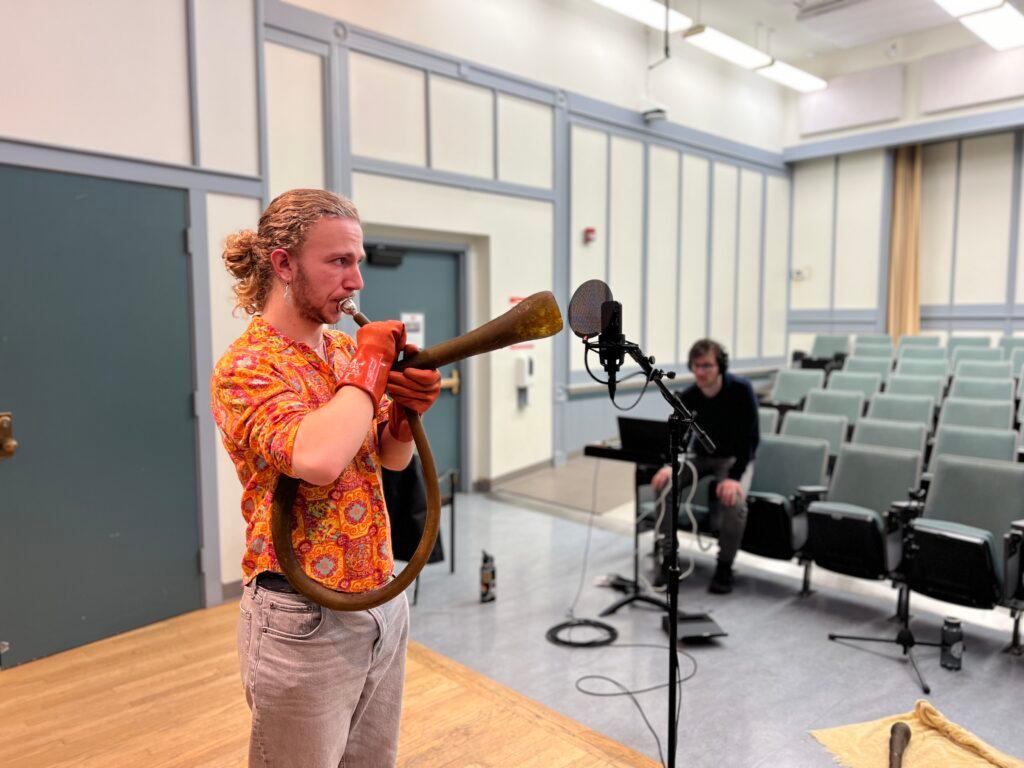
It consists today of two instruments, the Kelp Horn and the Lira de Ramo.
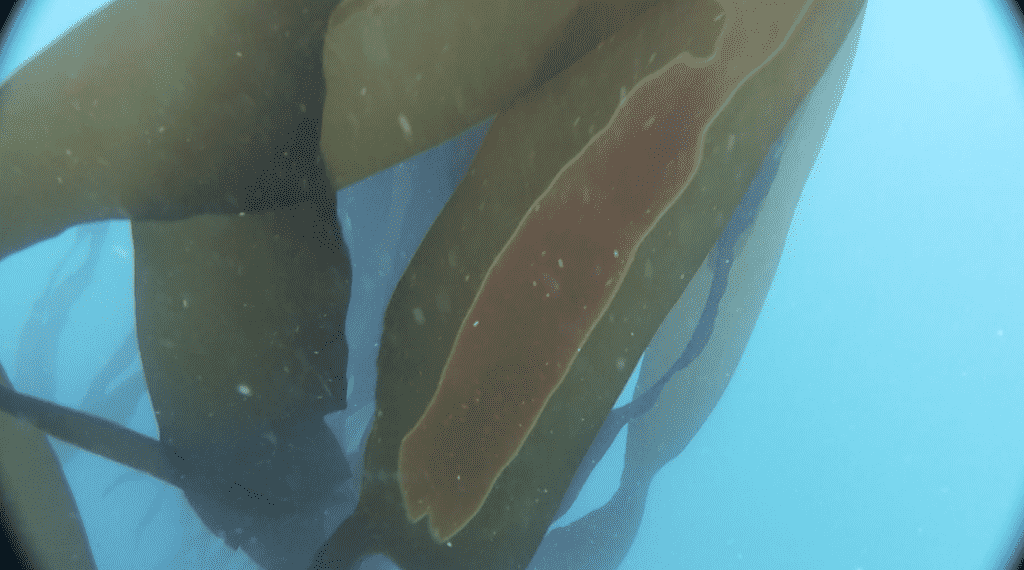
Bull kelp, Nereocystis leutkeana, meaning “mermaid’s bladder” is an annual macroalgae. It has a lovely natural history that weaves the story of our narrative. By providing structure to the rocky subtidal, it gives life to many organisms, past and present, small and large. From tiny juvenile rockfish to massive grey whales, extinct sea cows to urchin divers, many call kelp forests home.
Video credit: Sara Hamilton
On the Pacific coast of Oregon, springtime marks the beginning of long, brimming days of sunshine. Tiny bull kelp sporophytes have waited out the winter on the rocky ocean floor. In early spring, their cells begin to multiply and form a strong, rooted holdfast, an elongating stipe, and an air-filled pneumatocyst to float the kelp close to the nourishing light. The kelp grows and grows, sometimes nearly one foot in a day.
Under the full sun, kelps have been growing tirelessly. They will reach the surface of the ocean water, sometimes from depths of 40 meters by early summer. The blades fill out and the forest becomes lush and verdant. Rockfish swim between the graceful kelps and grey whales calmly drift amongst the floating pneumatocysts. The waters are rich with nutrients from upwelling processes. Patches of colorful, reproductive sori form on the dancing blades and release male and female zoospores into the water column.
Throughout late summer and fall, the spores meander through the pelagic sea, settle, and become mature, now ready to release sperm and eggs back into the water column. Through a chance encounter, these gametes blend and form the basis of an individual kelp- a unique sporophyte.
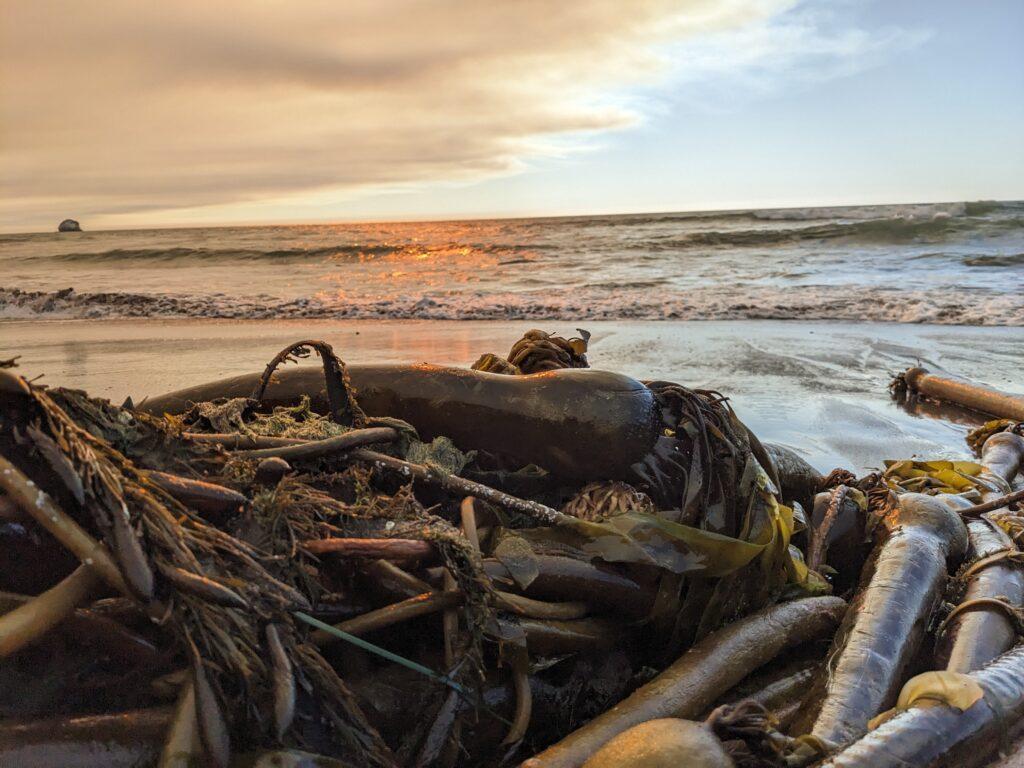
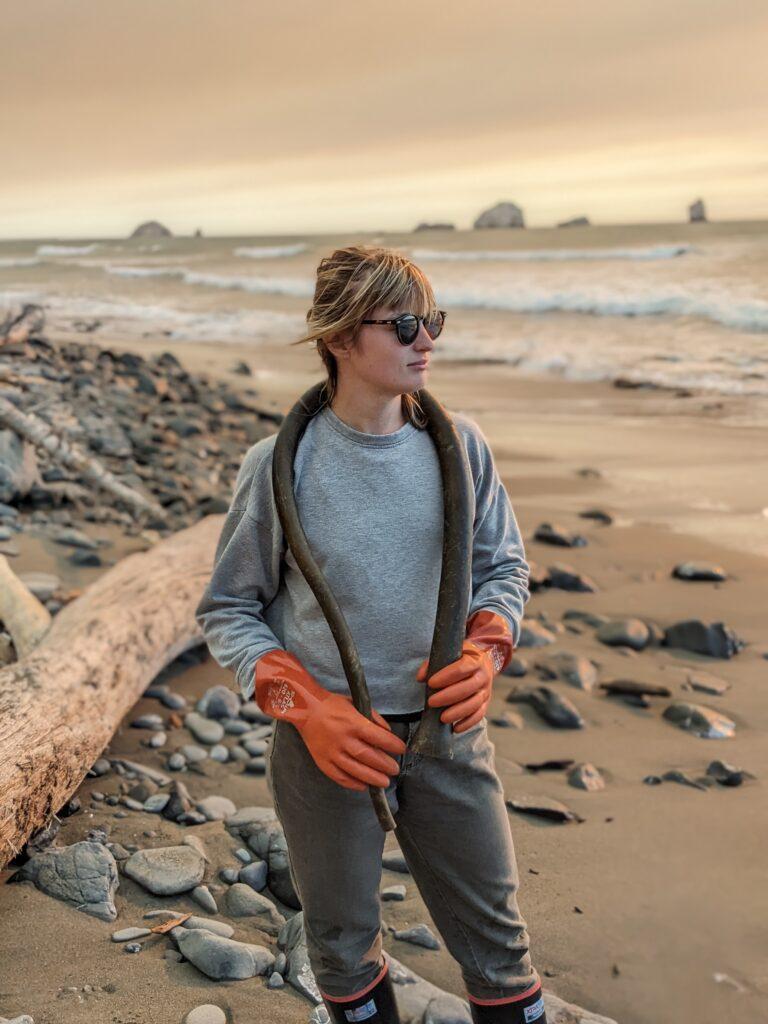
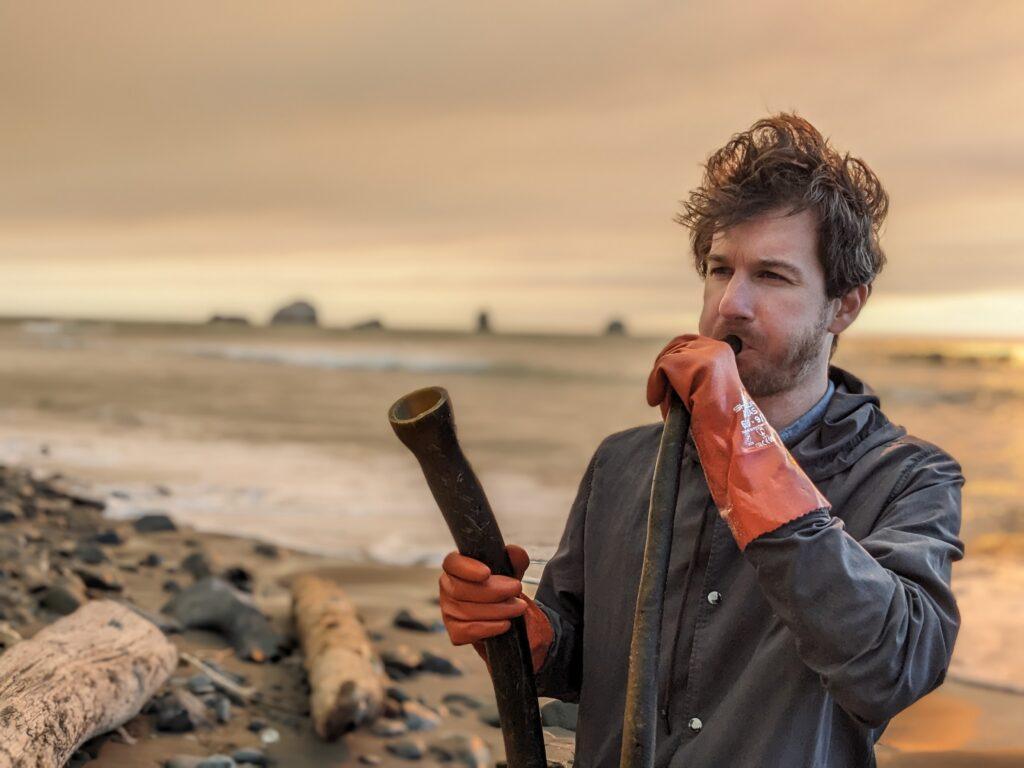
The sporophytes settle on the ocean floor into a winter sleep, waiting for spring light to begin growing into the next generation of bull kelp. Meanwhile, strong winter storms uproot this year’s adult kelps and sink them deep into the ocean or carry them to shore. These drift kelp may become resources for the intertidal, beach hideouts for crabs, or kelp horns for us.
Delaney Chabot is a Ph.D. student at Oregon State University in the Lubchenco-Menge Lab studying purple sea urchin ecology between kelp forest and rocky intertidal habitat.
Alex Ellsworth is a cellist and composer with a collaborative spirit. He has lent his musical stylings to projects by arts collectives, puppeteers, songwriters, and now scientists.
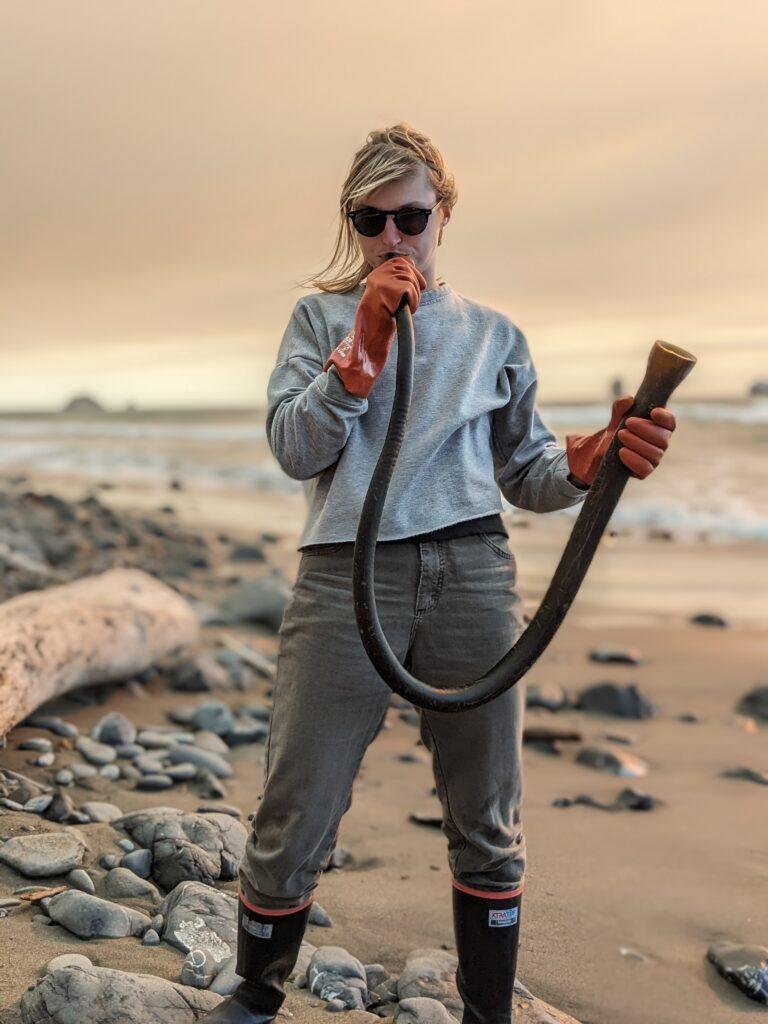
This piece came to being about a year and half ago. Alex and I had been wanting to work on a collaboration together blending our backgrounds of music and ecology. The inspiration for the Kelp Horn came from a community member at a local 500 Women Scientists event. After sharing with her that I was a kelp ecologist, she asked if I had ever “played” kelp and she showed me a video of her blowing into hollow bull kelp. To my surprise, it made a lovely sound. The next day I received a reminder email about the PRAx science and art fellowship application and miraculously there was one day until the deadline. I wrote to Alex and asked if he wanted to make some music with Oregon bull kelp. He excitedly agreed and we submitted our application in time to meet the deadline.
Over the past year, we have spent time in and around the kelp forests of Oregon, snorkeling, tidepooling, beach walking, and talking with folks. From this beauty, we’ve drawn inspiration for our project. The story is just beginning for us and yet has been told for time immemorial. The first inhabitants of North America likely followed kelp forests south, from community to community, relying on the biodiversity that the kelp sustains. The kelp horn and kelp rattle (and others) have been played for thousands of years. Hopefully they will be around for thousands more to come.
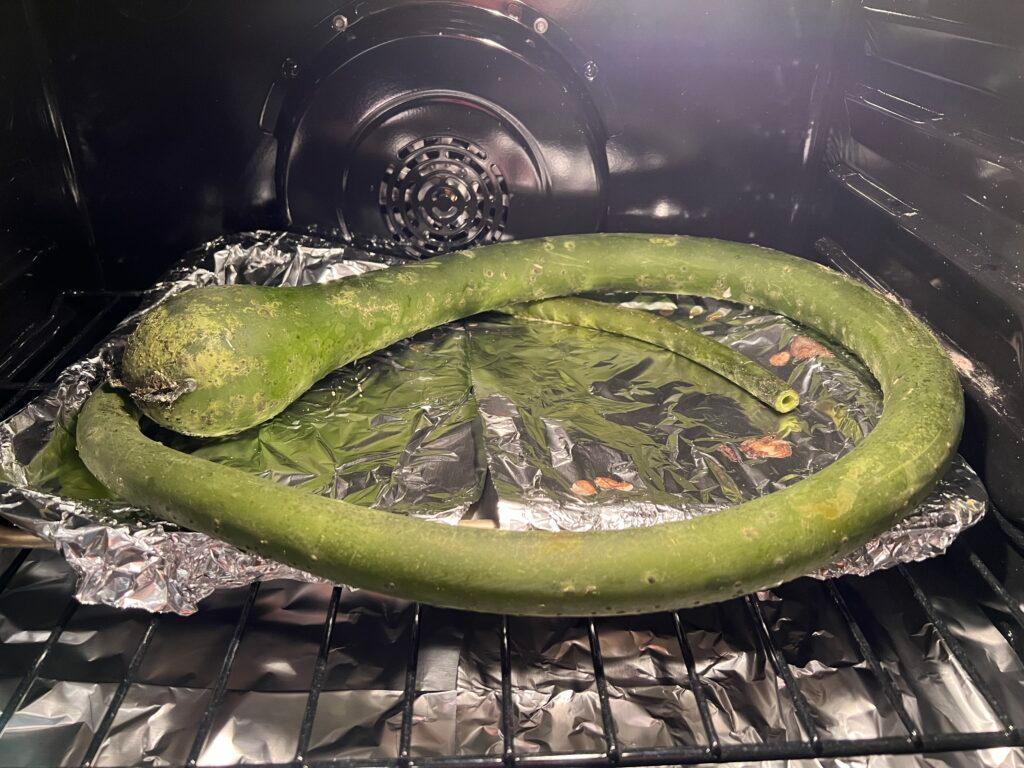
Kelp decays quickly, so the horn must be played within a week after it washes ashore to ensure the best playing experience. In an attempt to preserve these instruments for exhibition we found that the tubing cracks and buckles once it is dehydrated, compromising their sound quality. The instruments presented here exist as visual art pieces, honoring the ephemeral nature of the kelp horn.
The lira da ramo is an electronic stringed instrument, affectionately dubbed ‘the log.’ It can be played by any means that the musician wishes but is most often played between the legs like a viola da gamba or cello. It has also been played horizontally like a lap guitar or zither. Because there is no resonating body in the instrument, much of the sound is crafted by effects and amplification. It can achieve an earthy pizzicato and a trembling arco tone that is wonderfully unstable. With enough delay effects and the proper vigor, one might imagine it accompanying a scene in a beautifully filmed horror movie.
Across Oregon, many kelp forests have recently collapsed driven in large part by urchin grazing, warming waters, and other recent changes.
The Oregon Kelp Alliance, a group of engaged scientists, chefs, tribal leaders, community members, and others are working to protect and conserve Oregon’s beautiful kelp forests. You can learn more about ORKA here: www.oregonkelp.com

Like kelp’s annual lifecycle, this project is ongoing. We hope to inspire love and appreciation for these beautiful ecosystems and to energize people to protect the places and ways of life that they love.
Clay Min Andrews, Sara Hamilton, Jason St. Clair, Max Spears, Marilyn Blair and Clifford Bidgood, Bruce Menge, Debbie
All Rights Reserved 2024 © Delaney and Alex